

Assistech
From a classroom project on mobility for blind people to SmartCane's 150,000 users and a national centre for assistive health technologies
- Project
Early 2000s
A conversation with Dipendra Manocha of Saksham Trust identifies independent, safe mobility as the biggest challenge for blind people. Students in Prof. M. Balakrishnan's embedded-systems design course take it on, and the project becomes SmartCane, led by then-student Rohan Paul.
- Initiative
2007–2019
An interdisciplinary lab of computer scientists, electrical and mechanical engineers, designers and blind users forms in SIT. With Wellcome Trust support, Phoenix Medical Systems as manufacturing partner and Saksham for dissemination and training, SmartCane launches in 2014. OnBoard (bus identification), DotBook (a low-cost refreshable braille display, 2019) and tactile graphics follow.
- Ecosystem
2019 onwards
Assistech becomes a hub. The Raised Lines Foundation spins out to produce tactile STEM books. A Centre of Excellence in Tactile Graphics and the ICMR-supported National Centre for Assistive Health Technologies (NCAHT) at IIT Delhi mentor and scale innovations from inside and outside the Institute. Revenue flows back into research, and conferences convene the field.
~150,000
people in India and abroad using SmartCane
19
countries where Assistech outputs are available
3 m
SmartCane's above-knee obstacle range, versus about 1 m for a white cane
5×
lower cost of tactile STEM graphics with Assistech's production method
5
patents (braille displays, cane handle, multimodal interaction, destination identification)
The problem
India has one of the world's largest populations of blind and visually impaired people. For most of them, two things decide independence: moving around safely and getting an education. The white cane only detects obstacles below the knee and within about a metre, so overhanging branches, parked trucks and signboards are hazards. Braille displays and tactile diagrams for science and maths can cost more than a family earns in months. As Assistech's founders put it, the real barrier in low-income countries is often not whether a technology exists, but whether it is affordable.
What we built
Assistech is an interdisciplinary group of faculty, research staff and students, based in SIT. Its members include computer scientists, electrical and mechanical engineers, product designers and visually impaired users. It works across four areas: research and development, translational research, user engagement, and awareness and diffusion.
Mobility
- SmartCane: an ultrasonic obstacle detector that clips onto a standard folding white cane. It warns through vibration of obstacles from knee to head height up to three metres away. Repeated user trials reshaped its design, including the grip and handle size; the final validation involved more than 150 users in six cities. SmartCane Version 2 is now in large-scale trials.
- OnBoard: tells a blind commuter the route number of an approaching bus. It was trialled on 25 buses on two routes with BEST in Mumbai, and operator feedback led to a directional antenna design.
- MAVI (Mobility Assistant for the Visually Impaired): AI for Indian streets, reading multilingual hand-painted signs and warning of potholes and animals.
- IncluNav: indoor navigation with smartphone apps and Bluetooth beacons.
Education and information access
- DotBook: an affordable refreshable braille display built on proprietary shape-memory-alloy braille cells, launched in 2019. A new refreshable braille display co-created with Saksham Trust is now in trials.
- Tactile graphics: a software flow plus 3D-printed moulds that cut the cost of raised-line diagrams for STEM textbooks by at least five times. It is housed in a Centre of Excellence in Tactile Graphics at IIT Delhi.
- RAVI (Reading Assistant for the Visually Impaired): converts PDFs, including equations, tables and diagrams, into formats that screen readers can handle.
- TacRead and other tactile interfaces for reading digital text, and STEM learning kits such as the Shapescapes geometry kit.
How it grew
Assistech's journey is SIT's model in action. A course project with a clear user need, sharpened by the Saksham Trust, became SmartCane. Several faculty took ownership of a broader portfolio of mobility and education tools, with industrial and philanthropic partners to manufacture and distribute them. The group then became a hub for the national assistive-technology ecosystem. Its work includes spinning out the Raised Lines Foundation, hosting the ICMR-supported NCAHT, sending revenue back into research and convening conferences.
Impact
- SmartCane is used by more than 150,000 people in India and abroad. It is distributed through organisations for blind people, together with the training needed to use it, and is available under the Government of India's ADIP scheme.
- Tactile STEM books from the Raised Lines Foundation have reached thousands of blind students across India.
- National capacity: in June 2024 the ICMR Director General launched new products from NCAHT at IIT Delhi, including a geometry learning kit, high-quality white canes and an accessible STEM education kit, alongside large-scale trials of SmartCane Version 2 and a new refreshable braille display.
- Recognition: co-founder Prof. M. Balakrishnan received the 2018 ACM Eugene L. Lawler Award for Humanitarian Contributions within Computer Science, and two national awards for assistive technology. Assistech's work has been covered by The Wall Street Journal, Reuters, The Economic Times and The Hindu, among others.
What's next
The team's priorities are AI-based mobility assistance (MAVI), accessible indoor navigation (a current R-Systems CoE project), generative AI for accessing educational material, and low-cost braille displays at volume. All of them are open to students and collaborators.
Faculty
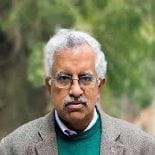
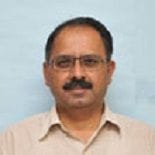
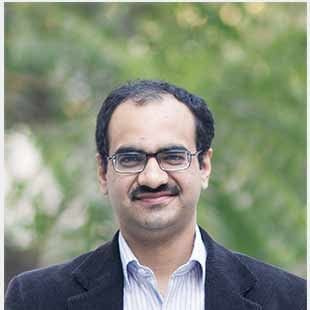
- Piyush Chanana


Partners
- Saksham Trustco-creation, dissemination and user training
- Phoenix Medical Systemsmanufacturing and support
- Wellcome Trustfunding for SmartCane (R&D for Affordable Healthcare in India)
- Indian Council of Medical Research (ICMR)supports NCAHT
- BEST, MumbaiOnBoard field trials
- Raised Lines Foundationnon-profit spin-out for tactile STEM books
Links
Next story
